U Minh Hạ National Park
U Minh Hạ National Park
Address: Tran Van Thoi District and U Minh District, Ca Mau Province, Vietnam
Introduce
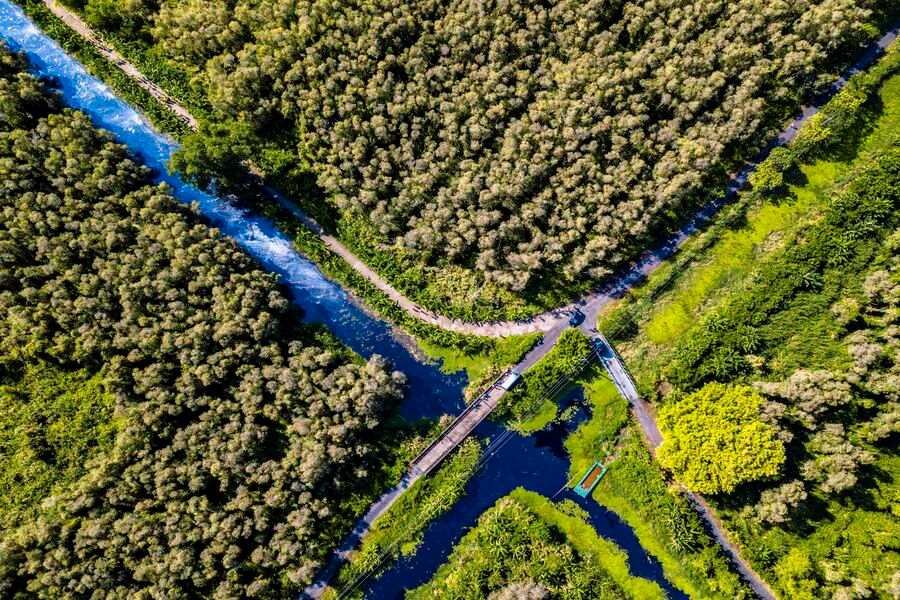
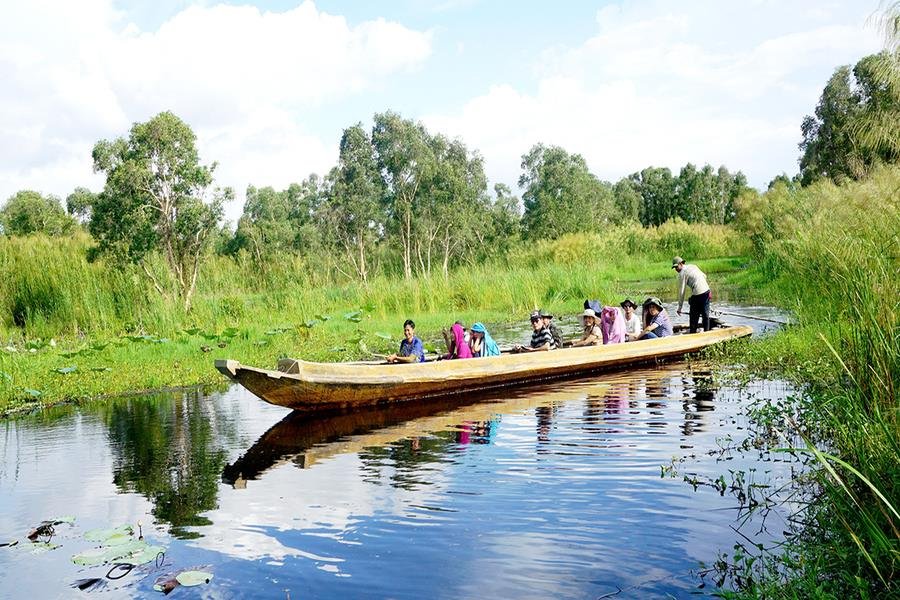
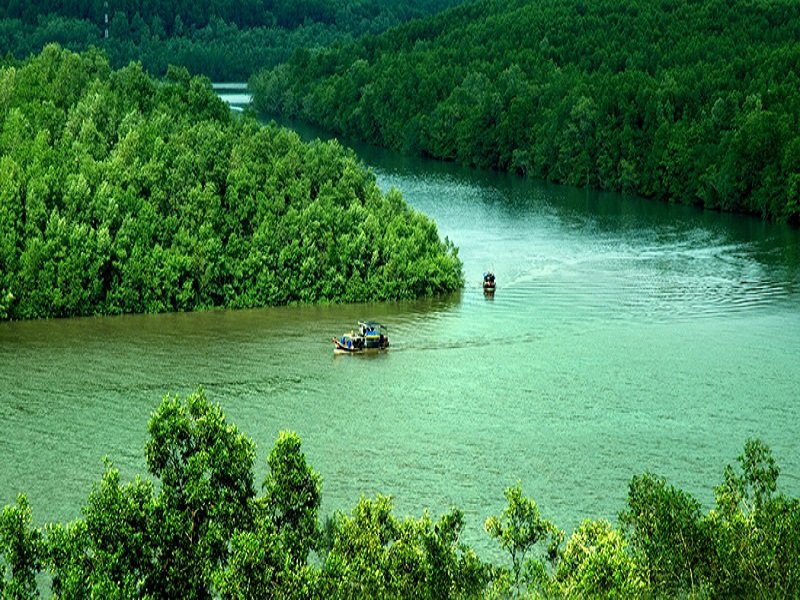
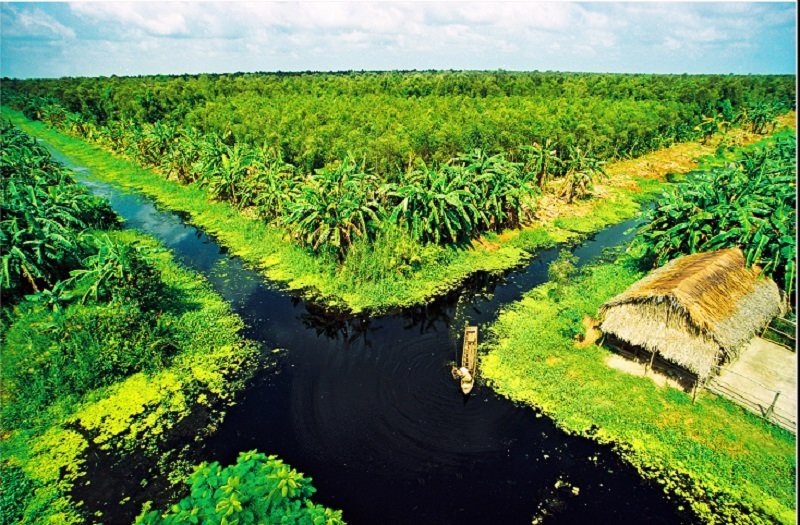
U Minh Ha National Park (UMHNP) covers an area of more than 8,500 hectares. It is one of the two national parks in Ca Mau Province and one of three wetland conservation sites in the Mekong Delta. On June 25, 2009, U Minh Ha National Park was recognized by UNESCO as one of the three core zones of the Mui Ca Mau World Biosphere Reserve. The park features a Melaleuca forest ecosystem formed under waterlogged and acidic conditions on peat soil. It is considered one of the largest peatland ecosystems in the region, with peat layers ranging from 0.5 to 1.5 meters thick over an area of 2,658 hectares, accounting for 31% of the park’s total area.
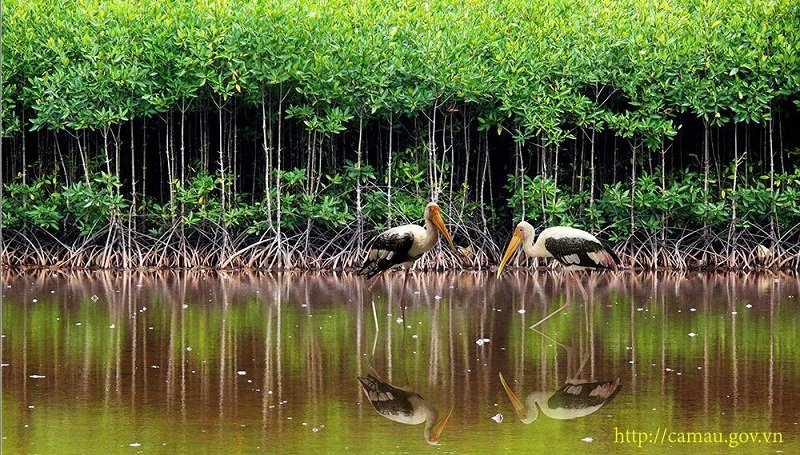
The park is characterized by high biodiversity typical of brackish wetland forests and serves as a habitat for many rare bird and mammal species of scientific value listed in the Vietnam Red Data Book, as well as several bird species threatened with global extinction, alongside many common animal species. Records indicate that the forest hosts more than 100 plant species and nearly 200 animal species, including mammals, birds, reptiles, amphibians, and freshwater fish. Over the years, biodiversity conservation at U Minh Ha National Park has received strong direction and attention from the leadership of Ca Mau Province, with coordinated and continuous implementation by relevant sectors and authorities through various specific activities. A key priority of forest conservation efforts is raising awareness among local communities. The park regularly collaborates with relevant agencies to promote forest protection and biodiversity conservation through mass media channels, with a strong focus on the Law on Forest Protection and Development, regulations on the management of special-use forests, dissemination of boundaries and zoning, functional sub-zones, objectives, and operational programs of the National Park.
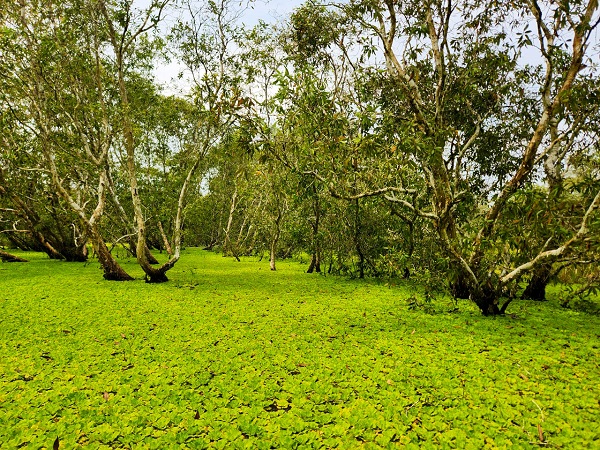
Forest biodiversity conservation is an important condition in responding to climate change.
Nguyen Van Liem, Head of the Forest Protection and Management Division of U Minh Ha National Park, stated: “Conservation work is closely linked with forest management and protection. In addition to effective communication and awareness-raising, forest protection forces regularly conduct patrols and inspections to prevent activities that may harm ecosystems or involve illegal forest exploitation. We mobilize people in the buffer zone to implement population relocation and stabilization, and to shift to appropriate crop and livestock structures. Proactive forest fire prevention and control plans are developed. At the same time, awareness and understanding within local communities are enhanced regarding forest management and protection, forest fire prevention and control, and wildlife protection within the National Park. Every year, U Minh Ha National Park organizes reforestation in bare lands and areas where forest trees have died. Currently, the park is receiving and preparing to restore 40 hectares of forest in the ecological restoration sub-zone. In addition, boundary clearing of the National Park is carried out in the field. Recently, U Minh Ha National Park coordinated with the Mobile Forest Ranger and Forest Fire Prevention and Control Team under the Provincial Forest Protection Department to release wildlife individuals back into the forest that were voluntarily handed over by local people or detected by forest rangers.”
U Minh Ha National Park coordinated with the Mobile Forest Ranger and Forest Fire Prevention and Control Team under the Provincial Forest Protection Department to release wildlife individuals back into the forest.
“Conserving the biodiversity of U Minh Ha National Park means conserving the typical Melaleuca forest ecosystem on peat soil of the Mekong Delta. The focus is on preserving unique cultural and historical values, restoring, maintaining, and expanding vegetation cover, and applying silvicultural techniques to create favorable conditions for flora and fauna to thrive. At the same time, ecotourism is developed to ensure livelihoods for communities living around U Minh Ha National Park,” said Nguyen Tan Truyen, Head of the Ecotourism and Environmental Education Division of U Minh Ha National Park.
Many rare animal species listed in the Vietnam Red Data Book, as well as common species, inhabit U Minh Ha National Park.
With the motto “conservation for development and development to create better conditions for conservation,” U Minh Ha National Park has oriented, is orienting, and will continue to orient the development of ecotourism associated with conservation and forest protection, based on utilizing existing natural conditions. “U Minh Ha National Park is a distinctive wetland area of the Mekong Delta, featuring a primary Melaleuca forest ecosystem developed on peat soil. Especially in the context of climate change and sea-level rise, peatlands are considered valuable carbon storage reservoirs of great scientific significance. For a long time, a key mission of the park has been forest management and protection, safeguarding habitats so that forest organisms can survive and develop. In the coming time, following the direction of provincial leaders, U Minh Ha National Park will implement integrated measures that combine forest management and protection with the development of forest ecotourism, ensuring development needs while harmonizing conservation objectives and preserving forest biodiversity. In particular, the park will focus on applying information technology and promoting digital transformation in key tasks such as forest fire prevention and control, scientific research, ecological restoration, and biodiversity conservation,” said Nguyen Tan Truyen, Head of the Ecotourism and Environmental Education Division of U Minh Ha National Park.
Bich Ngoc
Ca Mau Province Electronic Information Portal – camau.gov.vn – Posted on November 10, 2022

Feedback on service quality at this location
Vị trí